
The differences between CV and CA
Cyclic voltammetry versus chronoamperometry: when to use which, and what information each provides.
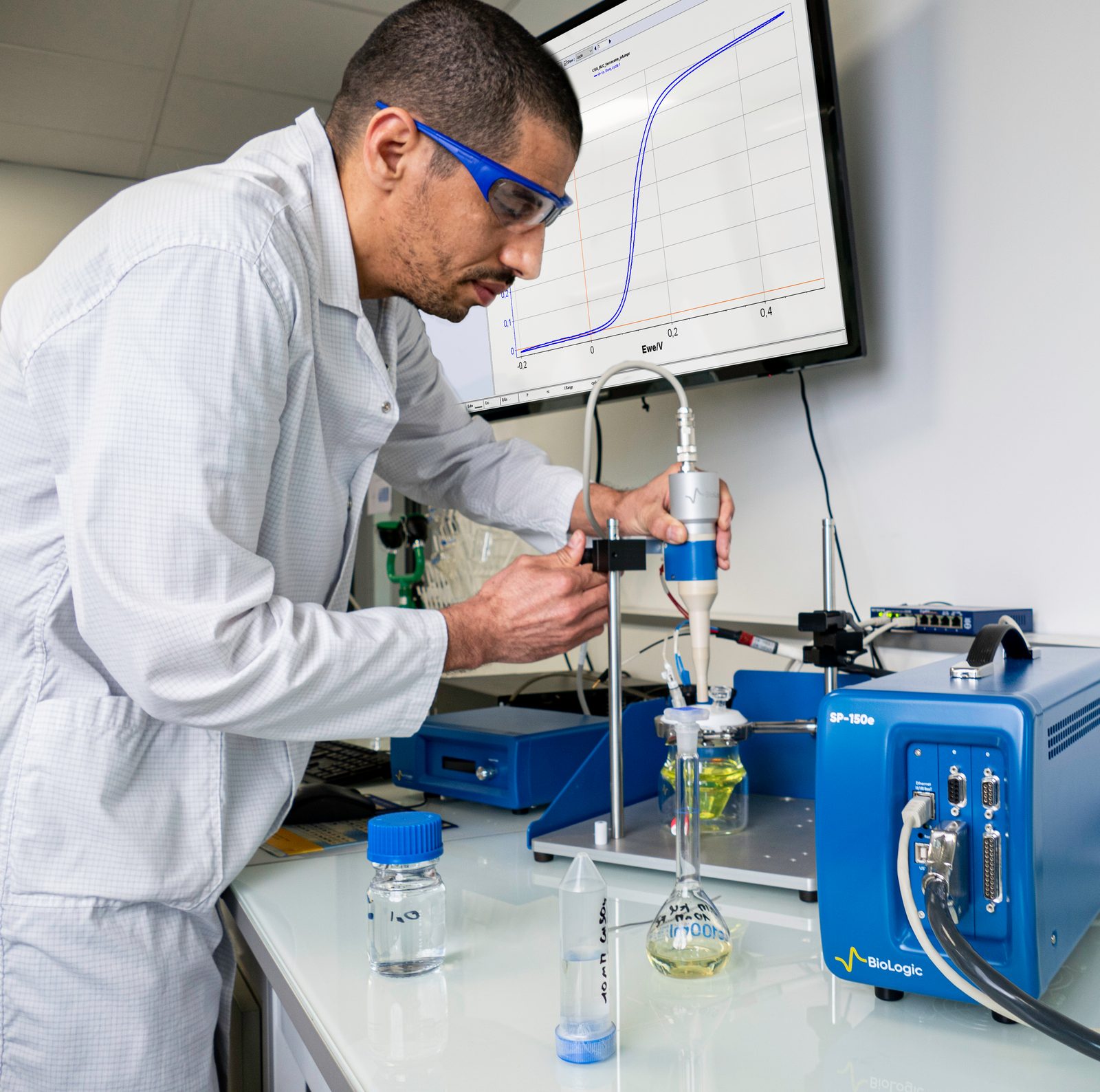
Cyclic voltammetry (CV) records the current while sweeping the potential back and forth at a constant rate (e.g. 10 mV/s – 1 V/s; up to 1 MV/s with ARG on Bio-Logic Premium instruments). The resulting voltammogram reveals redox potentials, reversibility, the number of electrons transferred and the mechanism (EC, ECE…); the relationship between peak current and scan rate distinguishes diffusion from adsorption control.
Chronoamperometry (CA)
In CA the potential is applied as a step and the evolution of current with time (Cottrell behaviour) is followed. Diffusion coefficient, electroactive area, nucleation/growth kinetics and the charge in electroplating/electrolysis processes (coulometry) are determined with this technique. Chronopotentiometry (CP) follows the potential at constant current; battery cycling (GCD) is a special case of it.
Practical choice
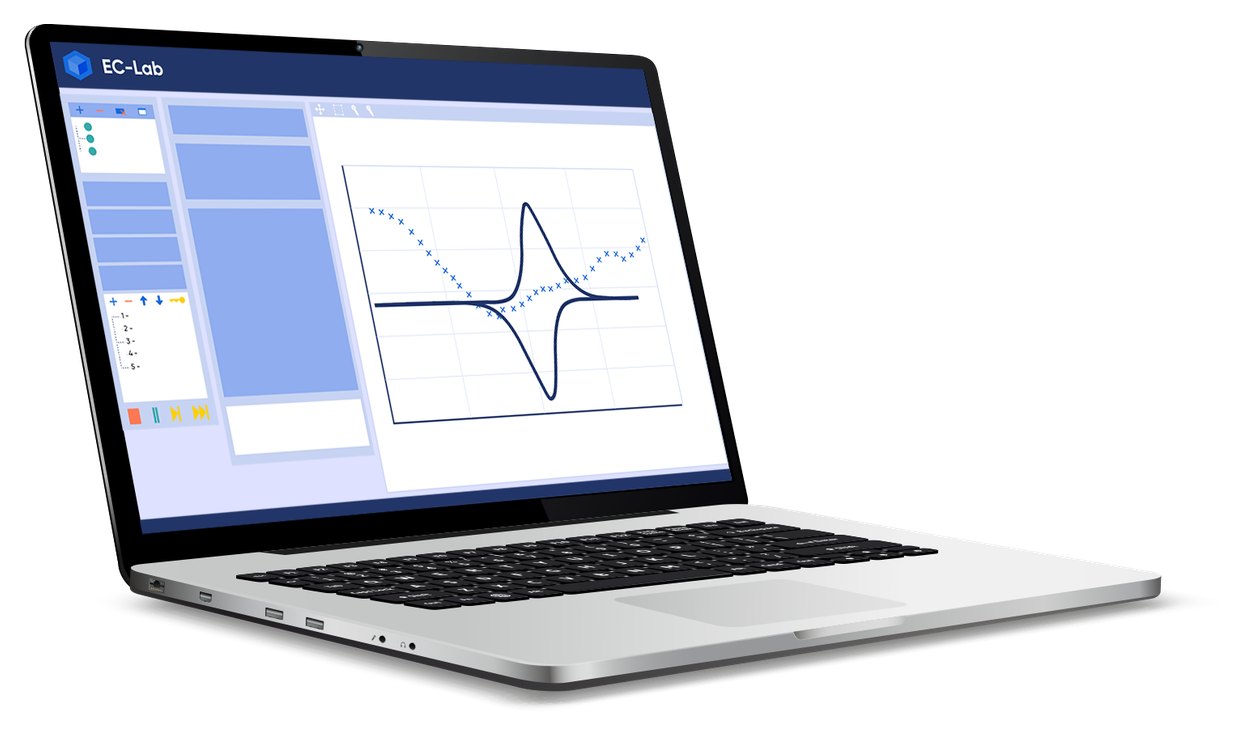
When characterizing a system for the first time, start with CV; once the mechanism and potential window are established, extract quantitative parameters with CA/CP. In EC-Lab® both techniques can be combined in a single experiment sequence with conditional limits and loops.
Sources: Bio-Logic 2026 product catalogue and product brochures; general electrochemistry literature. This content is for information; consult our technical team for instrument selection.